 Check today’s price
 Brand review · 3 min read
Terrone & Co. coffee review
What Terrone & Co. sells, what it costs against the rest of the market, and who should buy it.
Terrone & Co. asks 72p a cup at its cheapest, which is more than most whole bean coffee we list. Plenty of brands charge that and are worth it. The question is what you get for the difference, so here is the range, what it costs against everything else, and where we would put the money.
Short answer
Delicate and fruit-forward rather than strong, priced about where you would expect.
Cheaper than 37% of the whole bean coffee we track
- Tastes
- Fruity and sweet, lighter bodied
- Strength
- Mild to medium
- Best for
- Filter and pour-over
- Valuecup price vs the format median
- 2/5
- Easy to likefrom the roast profile
- 5/5
- Good for beginnersblend, roast and pack size
- 4/5
Cheapest cup£0.72across 17 products
Against the market+14%vs the whole bean median
Two cups a day£10.08a week at its cheapest
Largest pack1kg£32.00 per kg
Buy it ifyou finish a 1kg bag inside six weeks
Skip it ifBailies Coffee Roasters at 72p would do
Terrone & Co. products we track
Cheapest per cup first, with live prices.
Prices are the last we fetched and can move. As an Amazon Associate we earn from qualifying purchases. It never changes the order, which is always cheapest per cup first.
What kind of roaster this is
Terrone & Co. sells whole bean and pods in the UK, and we track 17 of their coffees, in 1kg and 250g.
Expect blends here rather than named farms: 94% of the classified range is blended. The trade is a familiar one. You give up the story on the label and you get a cup that does not drift between orders. The buying reaches 8 countries across the range, which is a wide book for a brand this size. The roasting spans 3 of our five levels, so there is a genuine choice to make inside the range rather than one house style applied to everything. Bags come in both small and kilo sizes, and the gap between them per kilo is usually the largest saving available anywhere on this page.
Formats and origins
What Terrone & Co. sources and sells. Each one is a live filter across every brand we track.
What Terrone & Co. coffee costs
The range runs from 58p to £1.44 a cup across 17 products. That is a 2.5× spread inside a single brand, which is why "is Terrone & Co. expensive" is the wrong question; the right one is which bag you pick. The cheapest is South American Blend in the 1kg, and the dearest is Colombia in the 250g.
| Product | Format | Size | Per cup | Per kg |
|---|---|---|---|---|
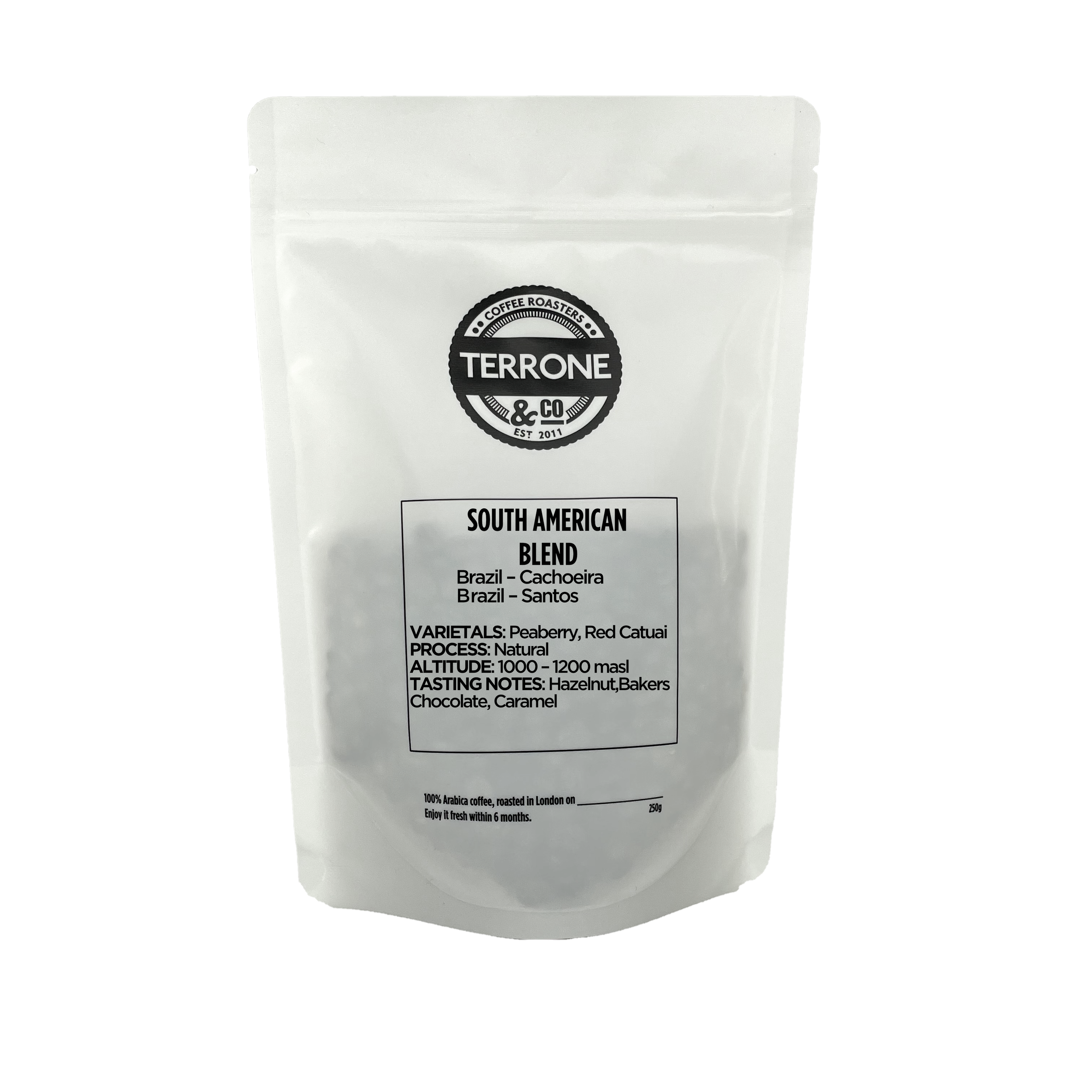
| South American Blend | — | 1kg | £0.58 | £32.00 |
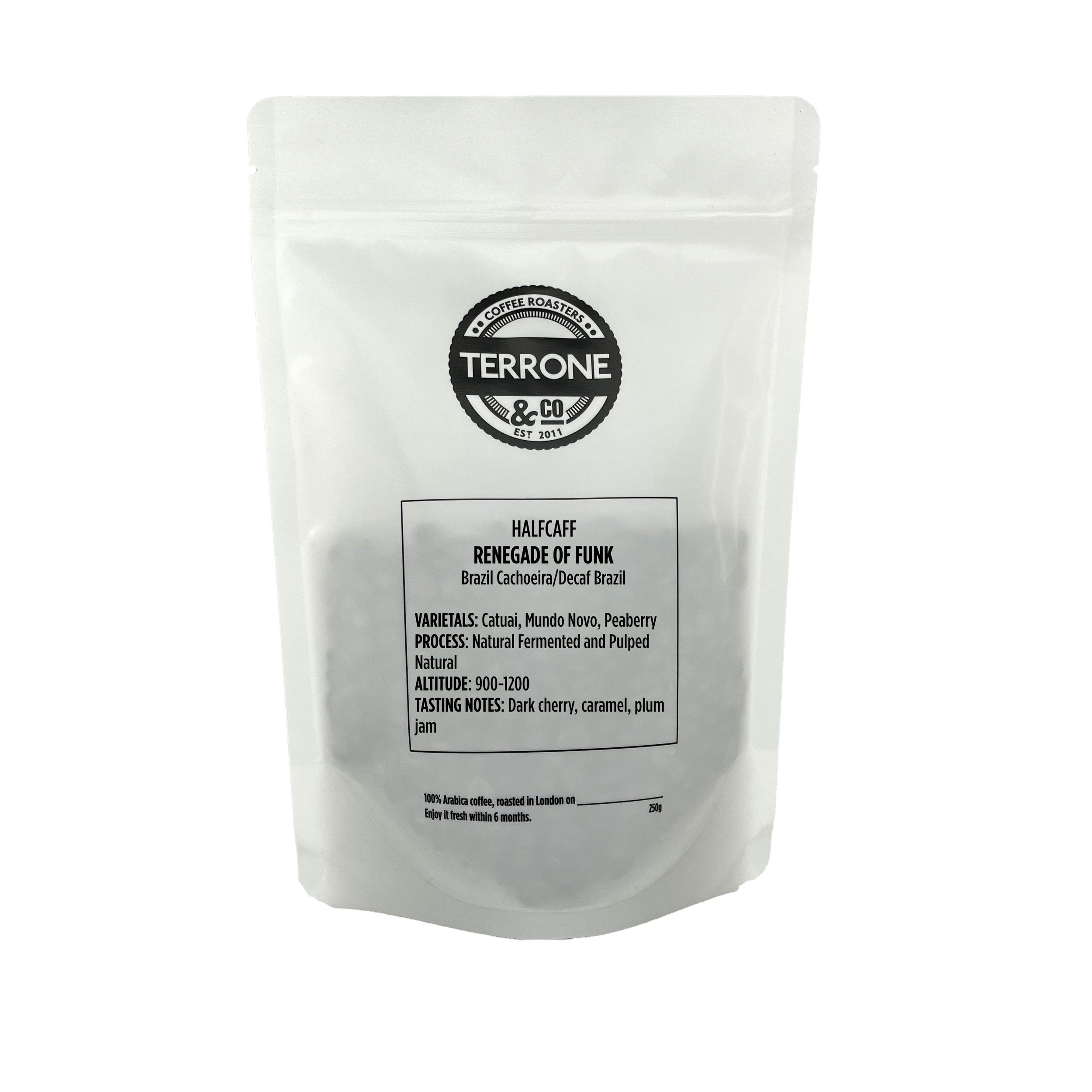
| 1/2 Caff | — | 1kg | £0.61 | £34.00 |
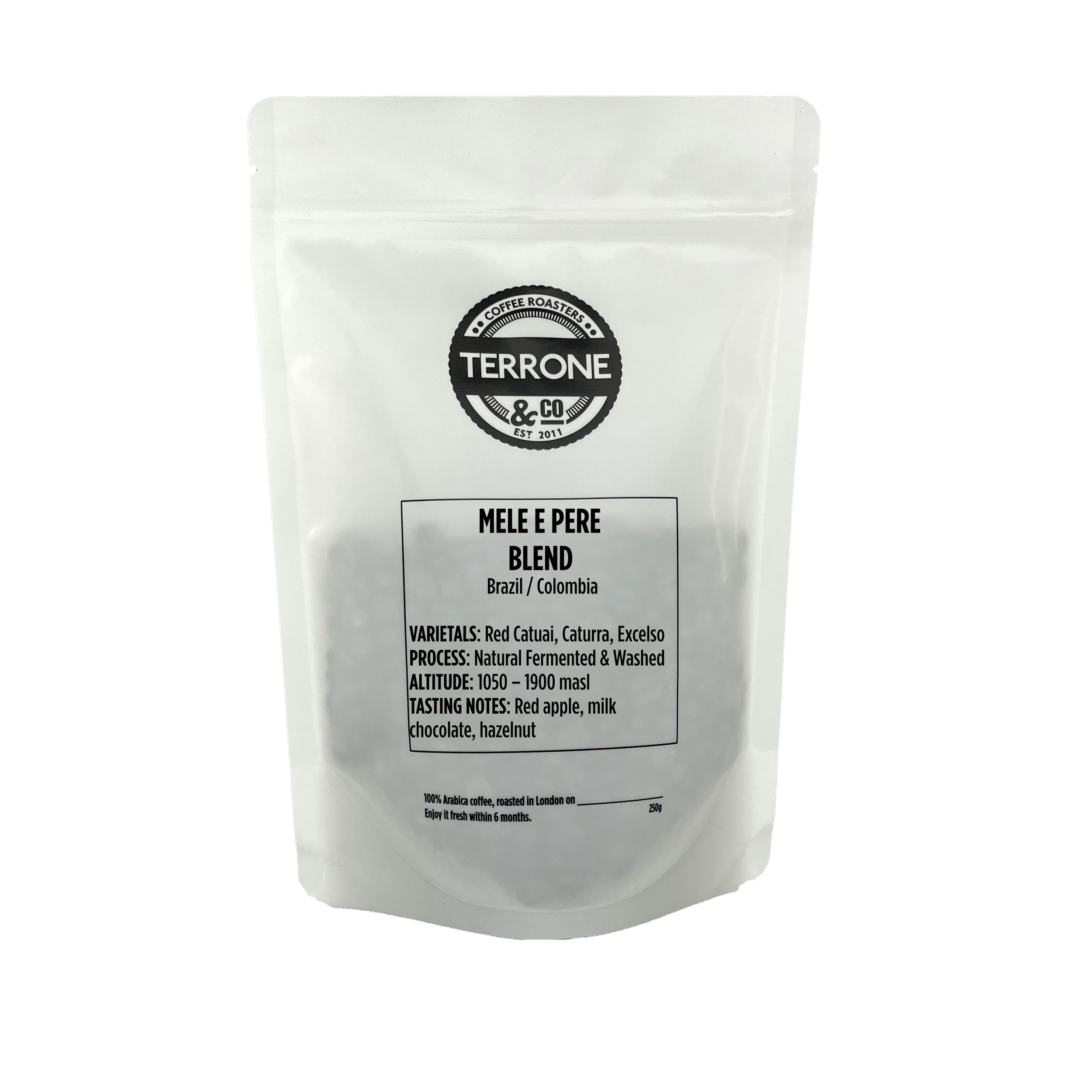
| Mele e Pere Blend | — | 1kg | £0.63 | £35.00 |
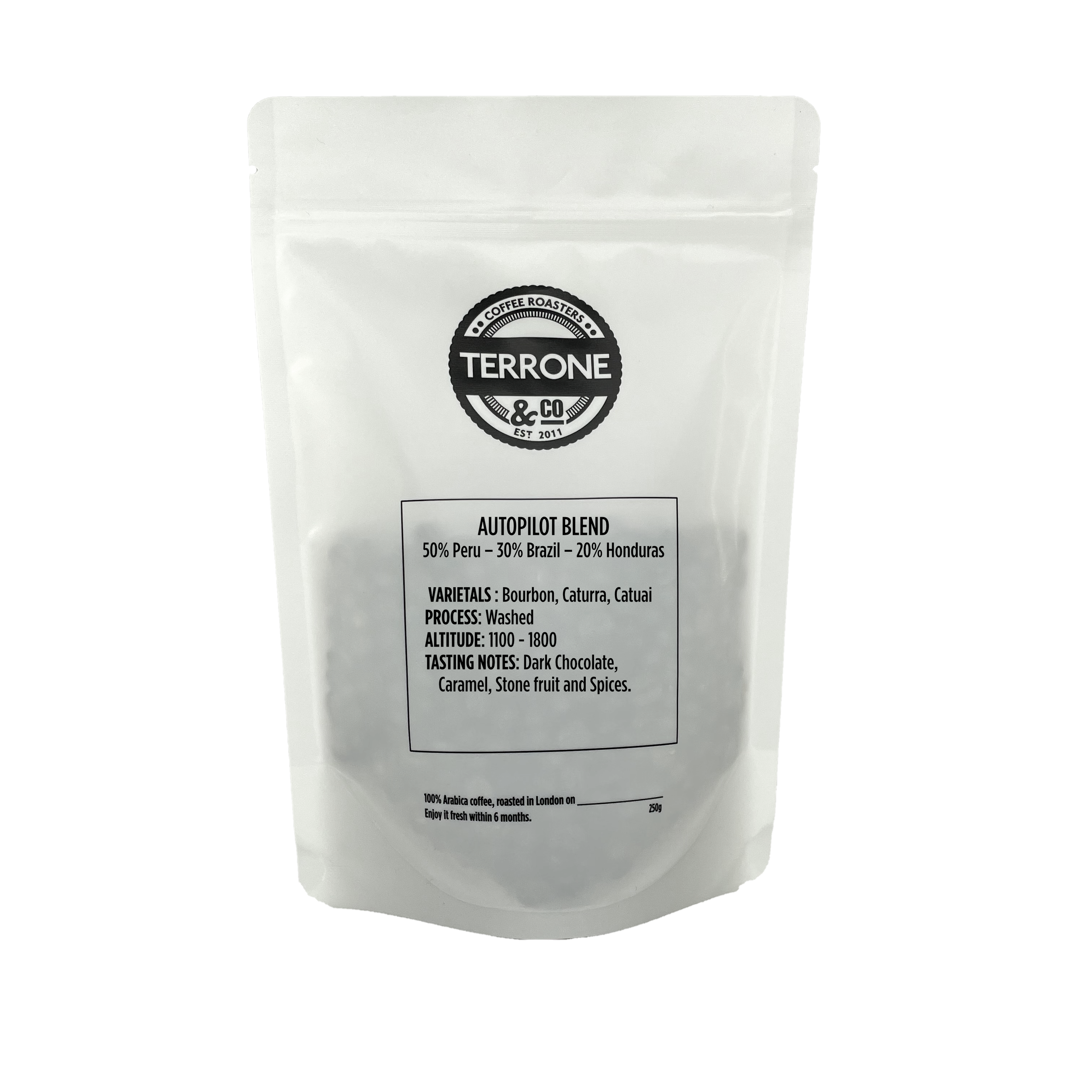
| Autopilot Blend | whole bean | 1kg | £0.72 | £40.00 |
| Capecki K3 Organic | whole bean | 1kg | £0.72 | £40.00 |
| Colombia | whole bean | 1kg | £0.72 | £40.00 |
| Mexico | — | 1kg | £0.72 | £40.00 |
| Akawa Project | whole bean | 1kg | £0.81 | £45.00 |
| Tanzania | whole bean | 1kg | £0.81 | £45.00 |
| Peru | — | 1kg | £0.81 | £45.00 |
| Guatemala | whole bean | 1kg | £0.81 | £45.00 |
| Cachoeira | whole bean | 250g | £0.86 | £48.00 |
Bags themselves run £12.00 to £65.00. Ignore that column. A bigger bag costs more and almost always costs less per cup, which is the only number that follows you home.
The one to buy
South American Blend is the cheapest thing Terrone & Co. sells, at 58p a cup. We cannot yet set that against a market average for whole bean coffee, so treat it as the floor of the range rather than a verdict on value.
What that costs over a year
How much coffee do you drink?
- Terrone & Co.£0.72 per cup£526
- Typical whole bean£0.63 per cup, our median£460
At 2 cups a day, Terrone & Co. costs £66 more a year than the typical whole bean coffee we track. Worth knowing before you commit to a subscription.
How Terrone & Co. tastes
We have not tasted Terrone & Co., so we are not going to invent a tasting note. A flavour score we did not earn would be worth less than none, and this section would be the easiest place on the site to quietly make one up. What we can show you is measured: where every coffee in the range sits on our own five-point roast scale, and which origins go into it. Roast is the strongest single predictor of whether a cup arrives bright and fruity or dark and chocolatey, so it is the closest honest answer to what this brand is like to drink.
How Terrone & Co. roasts
Every coffee standardised onto our own five-point scale rather than the roaster's. Read these as tendencies: origin, process and how you brew all move the cup.
Who it suits
- People who found something they like and want it to taste the same next year, which is what a blend is for.
- Pod machine owners, though price a compatible capsule for your machine before committing to the brand's own.
- People who want to choose their own roast rather than take the roaster's word for it, since the range covers 3 of our five levels.
Is it good value?
Our test is simple, and it is the same one we apply to everything: cost per cup against the median for the same format. Terrone & Co. lands around the middle. It is not the cheapest way to a cup of coffee, and the money above the median buys convenience and consistency rather than a smaller bill. Whether that is a fair trade is genuinely your call, not ours.
What else to consider
No brand is worth buying without knowing what sits next to it on price. These are the closest whole bean coffees we track to Terrone & Co., and the comparison hubs will put all of them on the same per-cup basis if you want to go wider.
Coffees priced like Terrone & Co.
The closest whole bean coffees on price per cup, from brands we also track. If one of these is cheaper for the same thing, that is worth knowing before you order.

Compare against the market
Keep reading
PricesTerrone & Co. price guideEvery bag priced per cup and per kilo, with the cheapest route to each one.BrandAll Terrone & Co. pricesLive prices on all 17 products, cheapest cup first.CompareEvery whole bean coffeeAll 812 of them on one per-cup basis, filterable by roast and origin.ReviewBailies Coffee Roasters reviewThe closest brand to Terrone & Co. on price, at 72p a cup.OffersToday's best valueEverything currently priced well under the median for its own format.