 Coffee machines · 8 min read
Descaling a coffee machine: how often, and with what
What De'Longhi, Sage, Philips and Nespresso each tell you to use, exactly what they say about vinegar and your guarantee, and what a year of descaling costs.
Descale when your machine's descale light comes on, or every 60 to 90 days on a machine with no light such as the Sage Barista Express, and use the maker's own descaler while the machine is under guarantee: De'Longhi EcoDecalk, Sage's Machine Descaler, Philips CA6700 or the Nespresso Descaling Kit. Never use vinegar. Philips and Nespresso both rule it out, and the proper stuff is cheap: EcoDecalk works out at £2.40 a descale on Amazon at the time of writing (October 2026).
How often should you descale a coffee machine?
As often as your machine asks, which depends on how hard your water is. Machines with a descale light time it by the water hardness you set. The De'Longhi Dedica EC685 has three settings, from soft water below 180mg/l of calcium carbonate to hard water above 360mg/l, according to De'Longhi's manual. Machines without a warning come with a schedule instead.
| Machine | How often to descale | According to |
|---|---|---|
| Sage Barista Express | Every 90 days at water hardness 4, every 60 days at hardness 6. No reminder light. | Sage quick guide |
| Sage Bambino Plus | When its buttons flash alternately for 15 seconds | Sage quick guide |
| De'Longhi Dedica EC685 | When the orange descale light comes on, timed by the hardness you set | De'Longhi manual |
| Philips Series 2300 LatteGo | When the Calc / Clean light comes on | Philips manual |
| Nespresso machines | Every 3 months or 300 capsules, whichever comes first | Nespresso descaling guide |
| Gaggia Classic | Every 2 months, or sooner if the flow drops | Gaggia |
Sage now gives two answers: 60 to 90 days in the Barista Express quick guide, and every one to two months, 'regardless of using the provided water filter', in the guide to its newer Machine Descaler. In a hard-water area, take the shorter one. Tom's Guide's maintenance advice, written with John Holmquist of Seattle Coffee Gear, puts it plainly: 'Even with a filter, you must descale regularly.'
What happens if you don't descale a coffee machine?
Scale slows the machine down, then blocks it. Sage's quick guides say hard-water mineral build-up reduces 'the brewing flow, brewing temperature, power of the machine, and taste of the espresso'. Philips says scale in the water circuit absorbs heat from the boiler, which lowers the temperature of your coffee.
At the far end, the water stops. Tom's Coffee Corner took apart a Sage Barista Express that had stopped delivering water and traced it to a heating block clogged with scale, a fault his video says can appear just after a descale. It can cost you the guarantee too. De'Longhi's Dedica manual says limescale damage is not covered 'unless descaling is performed regularly', and Philips' Series 2300 manual says: 'Failure to descale the appliance will also void your warranty.'
The hard-water faults Barista Express owners report, from leaks at the group head to weak steam, are in the full review. Sage Barista Express review
Which descaler should you buy for your machine?
The one your machine's maker sells, for as long as the machine is under guarantee. These are not exotic products: De'Longhi's and Nespresso's descalers are lactic acid, and Sage's is citric and tartaric acid, according to their own product pages and ingredient sheets. What you pay for is the maker's own dose and instructions, and no argument if something later goes wrong.
De'Longhi EcoDecalk: best for De'Longhi machines
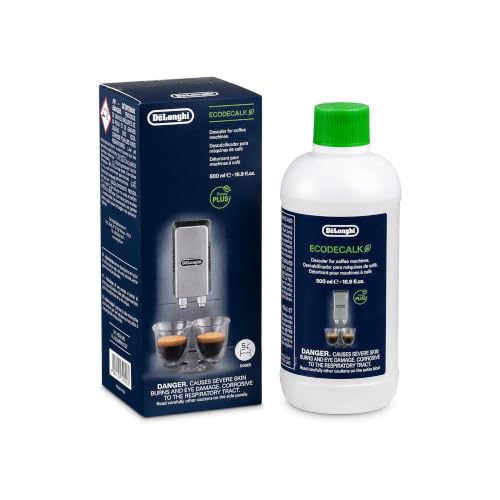
De'Longhi says to add 100ml to the water tank and run the machine's descale programme, so the 500ml bottle covers five descales. It describes the formula as 'lactic acid of vegetable origin'. At £12 on Amazon at the time of writing (October 2026), that is £2.40 a descale. De'Longhi's UK site now calls it Decalk Care; Amazon still lists it as EcoDecalk.
Buy it for any De'Longhi machine, from the Dedica EC685 to the Magnifica S, since De'Longhi recommends it for all its coffee makers. The Dedica manual is blunt about alternatives: 'You should use De'Longhi descaler only. Using unsuitable descaler and/or performing descaling incorrectly may result in faults not covered by the manufacturer's guarantee.'
What else the Dedica needs, and the upgrades owners fit, are in the full review. De'Longhi Dedica EC685 review
Sage Machine Descaler: best for Sage machines
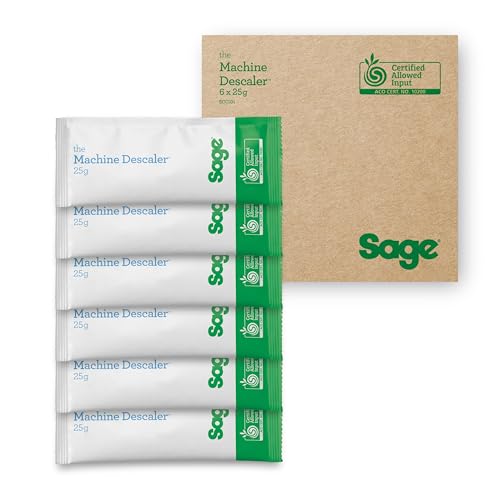
Sage's Barista Express quick guide says to dissolve one sachet of Sage descaling powder in a litre of cold tap water. The Machine Descaler comes as six 25g sachets, so a pack is six descales: £21.99 on Amazon at the time of writing, or about £3.67 each. Ignore the 4.17g in the Amazon title; Sage's own guide gives the pack as six sachets of 25g. Sage's ingredient sheet lists citric and tartaric acid.
Sage does not say another descaler voids its guarantee. Its descaler guide says 'Sage recommends using its own certified cleaning products', and the Barista Express and Bambino Plus quick guides say nothing about vinegar either way.
The Bambino Plus tells you when it needs descaling and when it needs a cleaning cycle; both are covered in the full review. Sage Bambino Plus review
Philips CA6700: best for Philips and Saeco machines

Philips' Series 2300 manual says to pour the whole bottle into the tank, top it up with water to the Calc / Clean mark, and run a programme that takes about 30 minutes. One bottle is one descale, so at £6.98 on Amazon at the time of writing it is the dearest per descale of the makers' own.
Philips is the most specific maker about what not to use: 'Under no circumstances should you use a descaler based on sulfuric acid, hydrochloric acid, sulfamic or acetic acid (vinegar) as this may damage the water circuit in your machine and not dissolve the limescale properly.' It recommends Philips maintenance products, but the Series 2300 manual's warranty line is about not descaling at all; it does not say another brand of descaler voids the warranty.
Nespresso Descaling Kit: for Original and Vertuo machines

Nespresso sells one kit for both Original and Vertuo machines: two 100ml sachets of a lactic acid solution, and its descaling guide uses one sachet per descale. At £9.48 on Amazon at the time of writing, that is £4.74 a descale, or £18.96 a year at Nespresso's interval of every three months or 300 capsules. Nespresso's UK product page says 'Never use vinegar as it can damage your machine', and its US descaling guide adds that other solutions, 'such as vinegar or store-bought descalers', may cause damage.
Generic citric or lactic acid descalers

Ecozone's Appliance Descaler costs £6 on Amazon at the time of writing for 500ml, which Ecozone says is up to five uses at 100ml a descale: £1.20 a time, half the cost of EcoDecalk. Its acids are malic and citric, neither of them on Philips' list. What you give up is the maker's backing. De'Longhi and Gaggia say to use only their own descaler and Nespresso warns against store-bought ones, so a generic bottle suits a machine that is out of guarantee. Ecozone itself says to check the manufacturer's guidance first.
Will vinegar or a cheaper descaler void your guarantee?
Vinegar is ruled out by Philips and Nespresso, and none of the five makers here recommends it. On other descalers their wording differs, so it is worth reading exactly what each one says.
| Maker | On other descalers and vinegar | On the guarantee |
|---|---|---|
| De'Longhi | 'You should use De'Longhi descaler only.' | Unsuitable descaler 'may result in faults not covered by the manufacturer's guarantee'; limescale damage is not covered unless you descale regularly |
| Philips | No descaler based on sulfuric, hydrochloric, sulfamic or acetic acid (vinegar); recommends Philips products | 'Failure to descale the appliance will also void your warranty.' |
| Nespresso | 'Never use vinegar as it can damage your machine.' | Not stated on the pages cited here |
| Sage | 'Sage recommends using its own certified cleaning products.' Vinegar is not mentioned | Not stated in the guides cited here |
| Gaggia | 'Use only the Gaggia decalcifier' | Not stated on the page cited here |
So a generic descaler in a De'Longhi under guarantee is a real risk if a fault follows; in a Sage it goes against Sage's recommendation, though the guides cited here stop short of saying it voids the guarantee. At six descales a year, the maker's own costs about £7 to £35 more than the Ecozone bottle.
What does descaling a coffee machine cost a year?
Between about £5 and £42 a year, depending on the descaler and how hard your water is. The table works from each pack's Amazon price at the time of writing and the dose each maker publishes. Four descales a year is roughly Sage's 90-day schedule and Nespresso's three-monthly one; six is Sage's 60-day schedule for hard water and Gaggia's two-monthly one.
| Descaler | Descales per pack | Per descale | Four a year | Six a year |
|---|---|---|---|---|
| Ecozone Appliance Descaler 500ml | 5 | £1.20 | £4.80 | £7.20 |
| De'Longhi EcoDecalk 500ml | 5 | £2.40 | £9.60 | £14.40 |
| Sage Machine Descaler, 6 sachets | 6 | £3.67 | £14.66 | £21.99 |
| Nespresso Descaling Kit, 2 x 100ml | 2 | £4.74 | £18.96 | £28.44 |
| Philips CA6700 250ml | 1 | £6.98 | £27.92 | £41.88 |
Even the dearest line is small next to the coffee. Six Sage descales a year cost £21.99, about the price of 35 home espressos at the 63p median per-cup price of the whole bean coffee we track.
| Spec | De'Longhi EcoDecalk Descaler 500ml | Sage Machine Descaler (6 sachets) | Philips CA6700 Espresso Machine Descaler 250ml | Nespresso Descaling Kit (2 x 100ml) | Ecozone Appliance Descaler 500ml |
|---|---|---|---|---|---|
| Amazon price | £12.00 | £21.99 | £6.98 | £9.48 | £6.00 |
| Pack | 500ml bottle | 6 x 25g sachets | 250ml bottle | 2 x 100ml sachets | 500ml bottle |
| Descales per pack | 5 | 6 | 1 | 2 | 5 |
| Format | Liquid | Powder | Liquid | Liquid | Liquid |
| Made for | All De'Longhi coffee machines | Sage espresso machines | Philips and Saeco espresso machines | Nespresso Original and Vertuo machines | Kettles, coffee machines and other appliances |
How do you descale a coffee machine, step by step?
Run your machine's own descale programme. The routine around it is much the same on every machine here.
- Take out the water filter. Sage, De'Longhi and Philips all say to.
- Empty the drip tray and put a large container under the spouts: 1.5 litres for Philips, 2 litres for the Sage Bambino Plus.
- Mix the descaler at the maker's dose: one Sage sachet to a litre of cold tap water, the whole Philips bottle topped up to the Calc / Clean mark, one Nespresso sachet. Sage says not to use bottled water.
- Start the descale mode and let it run through the coffee, hot water and steam paths.
- Rinse with a full tank of fresh water, then refit the filter. Allow 15 to 20 minutes for a Nespresso Citiz and about 30 for a Philips Series 2300, according to their guides.
Can you avoid descaling altogether?
No, though soft water stretches the interval: Sage says its filter lasts 60 litres instead of 40 at water hardness level 2. Distilled water is not the way out. Sage does not recommend highly filtered, demineralised or distilled water in the Bambino Plus, and Tom's Guide's advice is that the machine needs minerality to function. The one buyer who can skip this for now is a new Sage Barista Express owner, because Sage lists descaling powder among the accessories in the box.
The verdict
Use the maker's own descaler while the guarantee runs: De'Longhi EcoDecalk for De'Longhi, Sage's Machine Descaler for Sage, Philips CA6700 for Philips and Saeco, the Nespresso kit for Nespresso. Descale when the light says so, or on Sage's schedule if your machine has no light, and never with vinegar. Once the guarantee is over, a generic descaler is a fair saving, provided your manual does not rule out its acid.
- Sage, the Barista Express quick guide (BES875/SES875)Adjustable upper burr, which basket to use for which coffee, filter every three months or 40 litres, descaling every 60 to 90 days by water hardness, steam cut-out after 5 minutes.
- Sage, the Bambino Plus quick guide (BES500/SES500)Four filter baskets, dual wall for pre-ground coffee, cleaning cycle after 200 extractions, water filter after three months or 40 litres.
- Sage, the Machine Descaler x6 product page (UK)Sage's current descaler, sold in packs of six or twelve single-dose sachets.
- Sage, the Machine Descaler user guide (SCC101 and SCC102)Six or twelve 25g sachets, one sachet in a litre of water, descale every one to two months regardless of the filter, and 'Sage recommends using its own certified cleaning products'.
- Sage, the Machine Descaler ingredients data sheetCitric acid and tartaric acid.
- De'Longhi UK, Decalk Care (EcoDecalk) DLSC500 product page500ml with five doses, 100ml per descale, lactic acid of vegetable origin, recommended for all De'Longhi coffee makers.
- De'Longhi, EC685 instructions for use (PDF hosted by Tradeinn)Water hardness settings, the orange descale light, 'use De'Longhi descaler only', the guarantee wording, and a 0.5 litre rinse of the boiler outlet every 200 coffees.
- Philips, Series 2300 and 3300 fully automatic espresso machine user manualAcids not to use, the warranty line on descaling, the whole bottle per descale, about 30 minutes, AquaClean after 95 litres or three months, monthly coffee oil remover tablet, LatteGo after every use.
- Philips, CA6700 espresso machine descaler leafletOne 250ml bottle for one descaling cycle; scale in the water circuit absorbs heat from the boiler and lowers coffee temperature.
- Nespresso UK, Descaling Kit product pageTwo 100ml sachets for Original and Vertuo machines, lactic acid, 'Never use vinegar as it can damage your machine'.
- Nespresso, Citiz descaling guide (Nespresso US)Every 3 months or 300 capsules, one packet per descale, 15 to 20 minutes, and the warning about vinegar and store-bought descalers.
- Gaggia, Classic E24 product page and FAQThree filters and a plastic tamper in the box; descale every 2 months or when flow drops; 'use only the Gaggia decalcifier'.
- Ecozone, Appliance Descaler product pageUp to five uses, 100ml to a full tank for a coffee machine, malic and citric acid, check the manufacturer's guidance first.
- Tom's Guide, Espresso machine expert says this is the number 1 mistake home baristas make (Erin Bashford, March 2026)Maintenance advice from John Holmquist of Seattle Coffee Gear: specialist cleaning products, Cafiza powder, daily water flush, no distilled water, descale even with a filter.
- Tom's Coffee Corner (YouTube), Breville Barista Express Teardown & Scale Declogging!A Barista Express that stopped delivering water because its heater was blocked with scale.
- We Try Coffee catalogue medians, September 202663p a cup across 812 whole bean coffees and 71p across 483 ground coffees, both priced on an 18g dose.
Questions people ask
How often should you descale a coffee machine?
When the descale light comes on, or on the maker's schedule if there is no light. Sage's quick guide says every 90 days for the Sage Barista Express at water hardness 4 and every 60 days at hardness 6. Nespresso says every 3 months or 300 capsules, and Gaggia every 2 months. Harder water means more frequent descaling, even with a filter.
Can you use vinegar to descale a coffee machine?
Not if you follow the makers. Philips says never to use a descaler based on acetic acid (vinegar) because it may damage the water circuit and not dissolve limescale properly, and Nespresso's UK page says 'Never use vinegar as it can damage your machine'. De'Longhi and Gaggia say to use only their own descalers. None of them recommends vinegar.
Does a non-branded descaler void a coffee machine's warranty?
It depends on the maker. De'Longhi says an unsuitable descaler may cause faults its guarantee does not cover. Philips' Series 2300 manual voids the warranty for not descaling, and rules out four acids, but does not say another brand voids it. Sage recommends its own products, and its guides cited here do not say another descaler voids the guarantee.
What is the best descaler for a De'Longhi coffee machine?
De'Longhi EcoDecalk, which De'Longhi now also sells as Decalk Care. De'Longhi recommends it for all its coffee makers and says to use 100ml per descale, so the 500ml bottle does five descales. At £12 on Amazon at the time of writing (October 2026), that is £2.40 a descale. The Dedica EC685 manual says to use De'Longhi descaler only.
Which descaler should you use in a Sage Barista Express?
Sage's own descaling powder. The Sage Barista Express quick guide says to dissolve one sachet in a litre of cold tap water, and Sage's current Machine Descaler comes as six 25g sachets, £21.99 on Amazon at the time of writing. A new Barista Express includes descaling powder in the box, and the machine gives no reminder, so set your own.
How much does it cost to descale a coffee machine?
Between £1.20 and £6.98 a descale with the products here, at Amazon prices checked in October 2026. De'Longhi EcoDecalk works out at £2.40, Sage's Machine Descaler at about £3.67, the Nespresso Descaling Kit at £4.74 and Philips CA6700 at £6.98, because Philips uses a whole 250ml bottle each time. Four to six descales a year cost about £5 to £42.
What happens if you never descale a coffee machine?
Flow, temperature and taste fall, and eventually water can stop. Sage says scale reduces brewing flow, temperature, power and the taste of the espresso, and Tom's Coffee Corner traced a Sage Barista Express that stopped delivering water to a heating block clogged with scale. De'Longhi and Philips both tie their guarantees to regular descaling.
Keep reading