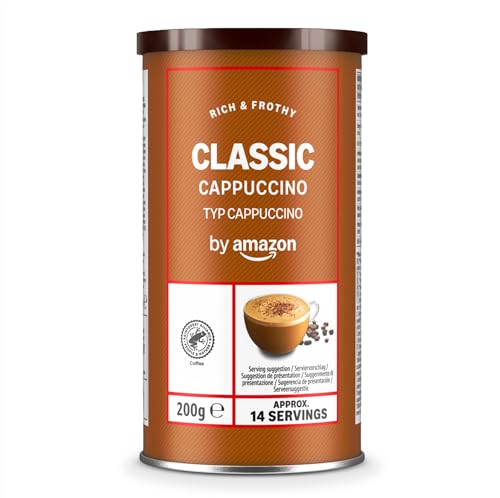
 Check today’s price
 Price guide · 2 min read
How much does coffee cost in the UK?
Typical prices by format, what a daily habit adds up to over a year, and the parts of the bill actually worth attacking.
The cheapest and the dearest way to make the same drink at home sit roughly ten-fold apart, and most of that gap is format rather than quality. So there is no single answer to what your coffee costs, only a useful range. Instant sits at one end of it and pods at the other.
Typical price per cup by format
Instant is cheapest per cup. Ground and beans sit close together in the middle, and pods cost the most, because with a capsule you are paying for the packaging and the dosing as well as the coffee. That ordering is remarkably stable even as the individual prices move around.
| Format | Usual range per cup | What drives the price |
|---|---|---|
| Instant | 5p – 15p | Jar size; freeze-dried costs more than spray-dried |
| Ground | 12p – 40p | Pack size, and supermarket versus speciality |
| Whole bean | 15p – 60p | Bag size and how the coffee was sourced |
| Pods and capsules | 20p – 50p | Brand versus compatible; multipack size |
These are ranges for coffee bought to brew at home. A high-street flat white is a different market: expect roughly £3.50 to £4.50 in most UK cities.
What a daily habit costs over a year
Every penny per cup costs you £7.30 a year. Two cups a day is 730 cups, so the arithmetic stays easy, and that one conversion is what turns small differences into real money.
| Per cup | Per week | Per year |
|---|---|---|
| 10p | £1.40 | £73 |
| 25p | £3.50 | £183 |
| 40p | £5.60 | £292 |
| £3.80 (bought out) | £53.20 | £2,774 |
Look at the last row. Moving even a couple of bought coffees a week over to home brewing dwarfs any amount of careful shopping between bags, and it is the largest saving available to almost anyone. Once you are brewing at home, the next biggest lever is pack size rather than brand.
Where the money actually goes
- Green coffee: the raw beans, priced on international markets and the most volatile part of the bill.
- Roasting, packing and shipping: relatively fixed, which is why small bags cost so much more per kilo.
- Retail margin and VAT: coffee beans and ground coffee are zero-rated in the UK, but ready-to-drink coffee is not.
- Format premium: capsules carry the cost of the plastic or aluminium, the nitrogen flush and the individual packing.
Cheapest coffee we currently track
Sorted by price per cup, across every format.
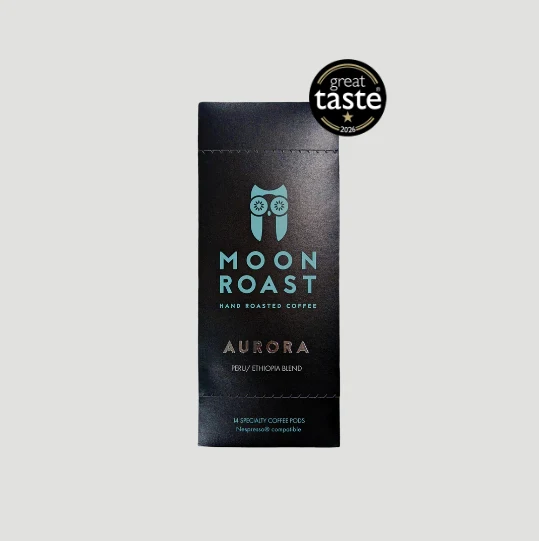


Prices are the last we fetched and can move. As an Amazon Associate we earn from qualifying purchases. It never changes the order, which is always cheapest per cup first.
Three changes that actually move the bill
- Buy the bigger bag if you will drink it in six weeks. Going from 250g to 1kg typically cuts price per kilo by a third.
- If you drink pods, try a compatible capsule before you change machine. The saving is usually 30% to 50% per cup.
- Check price per cup rather than price per pack before every repeat purchase. The same product moves between retailers week to week.