 Bean-to-cup machine review · 7 min read
Philips 2300 LatteGo review: easy cappuccino, mild coffee
Philips's entry-level LatteGo machine makes cappuccino at a touch and cleans up in seconds. The price of that convenience is a milder shot than De'Longhi's.
The Philips Series 2300 LatteGo is the bean-to-cup machine to buy if you want cappuccinos at one touch and hate cleaning milk systems: its LatteGo jug is two plastic parts with no tubes, and Philips says it rinses clean in as little as 10 seconds. It is £369 on Amazon at the time of writing (September 2026). It is the wrong machine if you like short, strong espresso, because independent reviewers and owners agree Philips machines dose less coffee per shot than De'Longhi's, and it has no latte or flat white button.
A one-touch cappuccino machine with the easiest milk system to clean at the price; set a fine grind and the strongest dose, or the coffee comes out mild.
- Type
- Bean-to-cup machine with an automatic milk jug
- Skill needed
- None to use; a weekly brew group rinse
- Best for
- Cappuccinos and black coffee, households that hate cleaning
Buy it ifYou drink cappuccinos and want them at one touch, with a milk jug you rinse under the tap.
Skip it ifYou drink short, strong espresso; Philips shots are milder than De'Longhi's by most accounts.

Who is the Philips 2300 LatteGo for?
Someone who wants cappuccinos and black coffee from fresh beans at the touch of a button, and who would rather not clean milk tubes. Philips lists a 15 bar pump, a ceramic grinder with 12 settings, a 275g bean container, a 1.8 litre tank and a 0.26 litre LatteGo milk jug, at 1,500W, in a body 24.6cm wide, 43.3cm deep and 37.1cm tall that weighs 8kg. The drinks are espresso, coffee and cappuccino, plus hot water.
It is the entry model in Philips's current LatteGo range, and reviewers who know the range think it is the one to buy. Coffeeness's Arne Preuss, who tested the US version (EP2330/10), says it has the best price to performance ratio in the range and makes the dearer 3300 'practically redundant'. Cafelista, a YouTube channel comparing the 2300, 3300, 4400 and 5500, says all four share the same brew group, ceramic grinder and pump, so the potential in the cup is the same and you pay more only for drinks and screens.
Mark's Tech Vlogs, a UK owner reviewing it after four weeks of daily use, bought it to replace a De'Longhi he had used for five years. His summary is that it is 'very difficult to fault', and that it has made more cappuccinos than his De'Longhi did in five years, because the milk is so easy.
How good is the LatteGo milk system?
The easiest automatic milk system to clean, by wide agreement, and good rather than great milk. LatteGo is a jug and a frame that clip onto the front of the machine: you fill it to the line for your drink, press cappuccino, and it froths straight into the cup. Philips's manual asks you to rinse it under the tap or put it in the dishwasher after every use, and owners comparing brands on r/superautomatic keep returning to the same point: whatever else they think of Philips, LatteGo is the simplest to keep clean.
The foam is the trade. Preuss found the quality 'top notch' but notes the wide spout leaves a few bubbles, and among owners of the dearer 5400 LatteGo on r/superautomatic, one describes foam that is bubbly rather than silky and another calls the texture 'not great'. Preuss measured a latte macchiato at 64°C. One assembly tip from him saves a puddle: clip the two parts together at the top first, then snap the bottom in until it clicks, or the jug drips.
There is no latte or flat white button. Mark found it makes cappuccino only, while Preuss got something close to a latte macchiato by turning up the milk foam setting on the cappuccino button.
Why is Philips coffee weaker, and can you fix it?
Because the brew group takes less coffee, and partly yes. Tom's Coffee Corner weighed the dose on a Philips 3300, which uses the same brew group as the 2300, and found about 6g at the lowest strength and 7.8g to 8.8g at the highest, against a smallest espresso of about 32g. That is a ratio of roughly 1 to 4, which he says makes a lungo rather than an espresso. By his measurements, a De'Longhi Magnifica Evo doses up to 12g.
Owners say the same without the scales. In r/superautomatic threads comparing Philips and De'Longhi machines, owners who have had both describe Philips shots as lighter and De'Longhi shots as fuller, and Cafelista calls Philips espresso 'on the smooth and light side'. Preuss is kinder: he found his espresso blend's chocolate and marzipan notes came through, with a velvety crema, and calls it a crowd pleaser that takes milk well.
What helps, from those sources: set the strength to its highest, grind finer (Tom's Coffee Corner goes to 2 of 12, Preuss to 3 or 4), and keep the espresso volume on its lowest setting. Philips's manual says to leave the grinder alone for the first 100 to 150 cups, roughly a month, and then turn it only while it is grinding, one notch at a time, judging the result after two or three drinks. For a properly strong shot, Tom's Coffee Corner loads up to 12g of ground coffee through the pre-ground chute instead, though he would not do it every day.
Is it quiet?
The grinder is; the pump is not. Philips says its SilentBrew technology makes the machine 40% quieter than earlier models, and Preuss measured the grinder at 63dB, which he calls quiet for any bean-to-cup machine and compares with 71dB for the De'Longhi Magnifica S. He also found the pump 'annoyingly loud' while brewing. Mark heard the same split, and Cafelista explains it: SilentBrew works on the grinder, not the pump.
What upkeep does it need?
More routine work than a De'Longhi, all of it quick. Philips's manual lists the jobs: rinse LatteGo after every use, empty the drip tray daily, take the brew group out and rinse it under the tap weekly, run a coffee oil remover tablet through it monthly, and grease it every 2 months. The brew group slides out of the side once you switch the machine off and lift out the water tank.
Owners do not find the greasing a burden. One LatteGo owner in r/superautomatic calls it two dots of grease every couple of months; others still choose De'Longhi because its brew unit needs only a rinse. Mark adds two small annoyances: an on/off button you have to press squarely, and a 'grounds full' light that once came on when the container was not full.
Descaling is rare if you use Philips's AquaClean filter. Philips says the machine can make up to 5,000 cups before it needs descaling, based on changing the filter 8 times when prompted, and the manual says to change it after 95 litres or every 3 months, whichever comes first. If you skip the filter, the descaling cycle takes about 30 minutes.
What does a year of coffee cost through it?
About £460 in beans at two drinks a day if you price each drink on an 18g dose at our 63p median, which is how we compare every machine. Two a day for a year is 730 drinks, and 730 at 63p is £459.90. In practice a single drink on a Philips with this brew group uses 6g to 8.8g by Tom's Coffee Corner's measurements, so the same median bean costs nearer 21p to 31p a shot: cheaper per cup, and weaker for the same reason.
| What you pay for | Per drink | Upfront | First year |
|---|---|---|---|
| Philips 2300 and whole beans at our median | £0.63 | £369.00 | £828.90 |
| Coffee-shop cappuccino at £3.50 | £3.50 | £0 | £2,555.00 |
| Coffee-shop cappuccino at £4 | £4.00 | £0 | £2,920.00 |
Against a £3.50 cappuccino, each drink at home saves about £2.87 in coffee, so the £369 machine has paid for itself after about 129 drinks: around nine weeks at two a day. Milk is extra at home and included in the café price.
Consumables are modest. Philips's own AquaClean filters are £20.88 for two on Amazon at the time of writing, so four a year cost about £42. Mark puts the coffee oil remover tablets at £8 for six and the brew group grease at about £6 a tube, and notes Philips sells spares directly, with a replacement brew group at £55.
What are the alternatives?
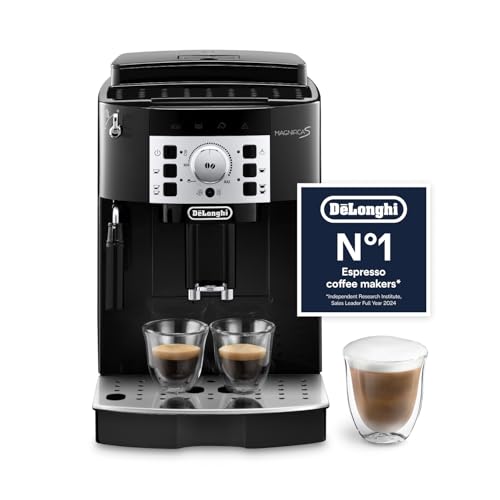
If you drink espresso or black coffee and do not mind steaming milk yourself, the De'Longhi Magnifica S is £290.82 on Amazon at the time of writing. It has no automatic milk, but its brew unit needs only a monthly rinse, and Tom's Coffee Corner rates De'Longhi's machines the stronger brewers.
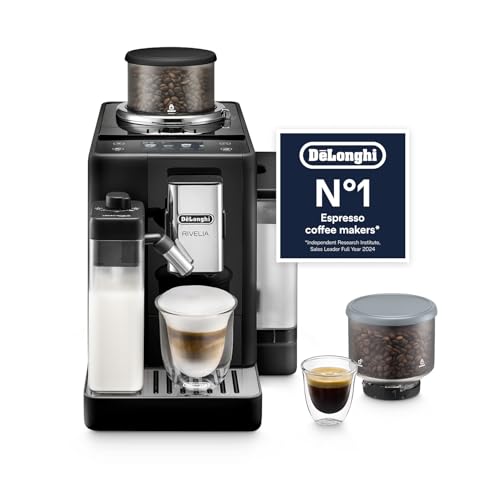
If you want lattes and flat whites on buttons, or two people need their own settings, the De'Longhi Rivelia is £592 on Amazon at the time of writing, with 16 one-touch drinks, user profiles and an automatic milk carafe.
The three machines are compared on specs and a year of running costs in our shortlist. The best bean-to-cup coffee machine
What warranty do you get in the UK?
Philips gives a 2 year warranty, according to its UK product page and spec sheet. Separately, GOV.UK's guidance says a seller must repair or replace a faulty item returned within six months unless it can prove the fault was not there when you bought it, and that you have up to six years to claim (five in Scotland).
- Philips UK, Series 2300 EP2339/40 product pageEspresso, coffee and cappuccino plus hot water; LatteGo cleaned in as little as 10 seconds; 2 year warranty.
- Philips, Series 2300 EP2339/40 leaflet (UK, March 2026)15 bar, ceramic grinder with 12 settings, 275g bean container, 1.8 litre tank, 0.26 litre LatteGo, 1,500W, 246 x 433 x 371mm, 8kg, 2 year warranty, made in Romania; SilentBrew 40% quieter than earlier models; up to 5,000 cups before descaling with AquaClean, based on 8 filter changes.
- Philips, user manual for the Series 2300 and 3300Leave the grind alone for the first 100 to 150 cups; change it one notch at a time while grinding; rinse the brew group weekly, use a coffee oil remover tablet monthly and grease it every 2 months; rinse LatteGo after every use; AquaClean filter after 95 litres or 3 months.
- Coffeeness, Philips 2300 LatteGo review (Arne Preuss)Tested the US EP2330/10: grinder at 63dB against 71dB for the Magnifica S, a loud pump, espresso at 60°C and milk drinks at 64°C, a few bubbles in the foam, grind 3 or 4 and strength 2 of 3, best price to performance in the Philips range.
- Mark's Tech Vlogs (YouTube), Philips 2300 Series LatteGo Bean to Cup Machine Review: Is It Worth It?A UK owner after four weeks of daily use, replacing a five-year-old De'Longhi: quieter grinding but not brewing, no latte button, a false 'grounds full' light, filters about £14, oil remover tablets £8 for six, grease about £6, a replacement brew group £55 from Philips.
- Tom's Coffee Corner (YouTube), Philips Coffee too Weak? Try these tips! Philips 3200, 3300, 5500The 2300, 3300 and 5500 share one brew group; about 6g of coffee at the lowest strength and 8g to 8.8g at the highest, against a 32g minimum espresso; finest grind and maximum strength help; De'Longhi's Magnifica Evo doses up to 12g.
- Cafelista (YouTube), Philips 2300 vs 3300 vs 4400 vs 5500: Which one is actually worth the price?Same brew group, grinder and pump across the range; espresso 'on the smooth and light side'; the 2300 has four drinks with three strengths, three doses and three temperatures; SilentBrew acts on the grinder, not the pump.
- Reddit r/superautomatic, '$420 Phillips 3200 LatteGo or $599 DeLonghi Magnifica Evo LatteCrema' (December 2025)Owners who have had both brands: LatteGo the easiest milk system to clean, De'Longhi shots stronger and its brew group less work, Philips pucks lighter.
- Reddit r/superautomatic, 'Is the milk foam from Philips 5400 LatteGo significantly worse than that made by Delonghi Magnifica Evo Latte Crema?' (April 2024)LatteGo owners on bubbly rather than silky foam, the two-monthly greasing of the brew group, and the trade between an easy milk system and a fussier brew group.
- GOV.UK, Accepting returns and giving refunds: the lawWritten for sellers: repair or replace within six months unless the seller proves no fault, and up to six years to claim (five in Scotland).
- We Try Coffee catalogue medians, September 202663p a cup across 812 whole bean coffees and 71p across 483 ground coffees, both priced on an 18g dose.
- Amazon UK listing B0G92WF3SRPrice of £369.00 when checked on 29 September 2026.
Questions people ask
Is the Philips 2300 LatteGo easy to clean?
Yes. The Philips Series 2300 LatteGo milk system is two parts with no tubes, and Philips says it rinses clean in as little as 10 seconds or goes in the dishwasher. The rest of the routine, from Philips's manual, is a weekly brew group rinse, a monthly coffee oil remover tablet and a little grease on the brew group every 2 months.
Why is coffee from my Philips 2300 weak?
Because the brew group in the Philips Series 2300 takes about 6g to 8.8g of coffee per drink, by Tom's Coffee Corner's measurements on a Philips 3300 with the same brew group, against about 32g of espresso out. Set the strength to maximum, grind finer one notch at a time while the grinder runs, and use the smallest espresso volume. Philips advises leaving the grind alone for the first 100 to 150 cups.
Can the Philips 2300 LatteGo make a latte?
Not from a latte button. The Philips Series 2300 LatteGo has espresso, coffee and cappuccino buttons plus hot water. Coffeeness found that turning the milk foam setting on the cappuccino button up to maximum gives something close to a latte macchiato. For lattes and flat whites on their own buttons, look at a dearer machine such as the De'Longhi Rivelia.
How often do you descale a Philips 2300 LatteGo?
Rarely, if you use the AquaClean filter. Philips says the Series 2300 can make up to 5,000 cups before descaling when you change the filter each time it asks, 8 changes in all. The manual says to replace the filter after 95 litres or every 3 months. Without the filter, descaling takes about 30 minutes whenever the machine asks.
Is the Philips 2300 better than the De'Longhi Magnifica S?
For cappuccinos, yes: the Philips Series 2300 LatteGo froths milk at one touch and its milk system is the easiest to clean. For espresso and black coffee, owners generally prefer the De'Longhi Magnifica S, which doses more coffee per shot and needs less brew group upkeep, and it was about £78 cheaper on Amazon in September 2026.
Keep reading